We humans live in the Milky Way Galaxy, and our Earth and the entire Solar System are a very small portion of the Milky Way Galaxy. Outside of this galaxy, there are trillions of others. The closest one is the Andromeda Galaxy. It’s the most distant object visible without a telescope from Earth. But do you know where is the Andromeda Galaxy? How far is it from the Milky Way, specifically from Earth? Because we can see it (when the timing is good and there aren’t a lot of other lights) from Earth, it must be close. Well, sort of.
Check this article out, too: Nebula and Galaxy: What’s the Difference
You must remember that the scale of the universe is incomprehensible to us humans. Andromeda Galaxy is 200,000 light-years across (not away, across, so from end of the galaxy to the other). Travelling from one end to the other would take you 200,000 years. The Milky Way Galaxy is half of this (100,000 light-years). The Andromeda Galaxy sits 2.5 million light-years away from us. The fuzzy patch of light you see (when you are lucky) is 2.5 million years old. But where is the Andromeda Galaxy? Why can we see it and how?
Exploring the Andromeda Galaxy
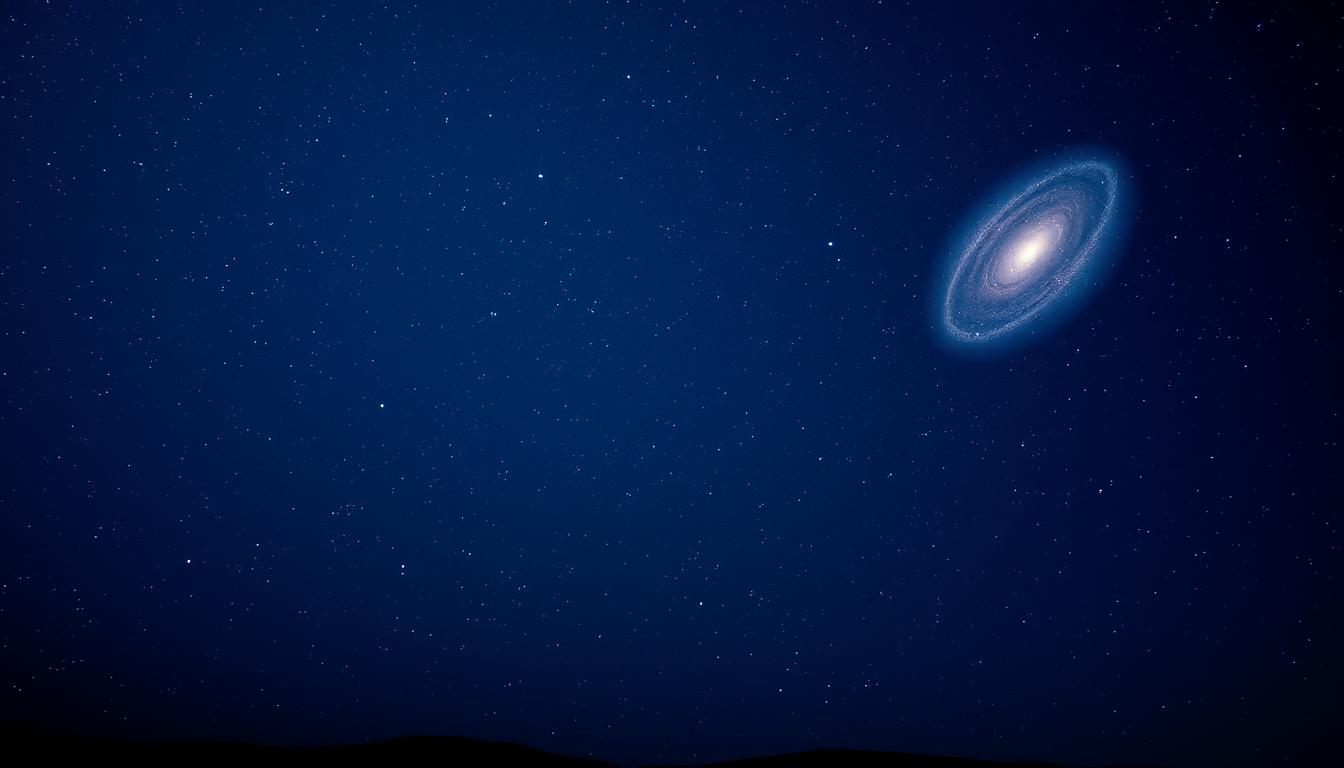
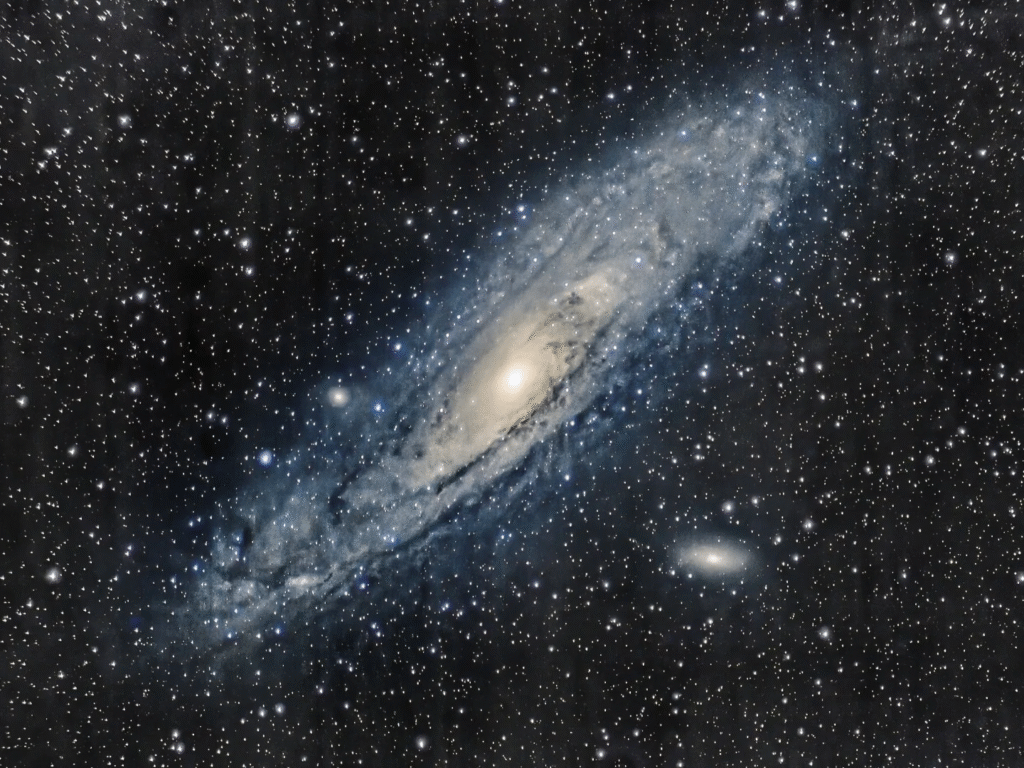
The Andromeda Galaxy is a giant barred spiral galaxy and the closest galaxy to us in the Milky Way’s neighborhood. It’s approximately 2.5 million light-years from Earth, meaning the light we see from it today began its journey long before humans even existed. Andromeda has around one trillion stars in it (estimated), and this is twice the size of our Milky Way. It has bright spiral arms, a huge central bar, and rings of dust and gas. It is likely that past collisions with smaller galaxies created these rings, including their satellites, M32 and M110. Surrounding it is a massive, nearly invisible halo of hot gas that stretches for about a million light-years. Inside its center, there’s even a supermassive black hole, millions of times the mass of our Sun, quietly pulling everything around it.
The Andromeda Galaxy’s spiral arms are made of billions of stars and are actively forming new stars. It’s classified as a barred spiral (Milky Way is also a barred spiral), meaning it has a thick, elongated center called a bar. Infrared telescope images show two main spiral arms stretching out from this central bar, although they look segmented rather than smooth and continuous. The galaxy is tilted about 77 degrees in our view, so we mostly see it from the side. These arms and the galaxy’s large diameter make it a huge spiral city of stars. The galaxy is also surrounded by a halo of ancient, metal-poor stars and gas.
Historical Discoveries and Scientific Milestones
For centuries, Andromeda was known as a faint “nebula” before astronomers realized it was its own galaxy. Back in 1923, Edwin Hubble made a discovery that changed many fundamental concepts in our understanding of the universe. We now know that there is more than just our Milky Way Galaxy out there. Then came the more advanced telescopes, and we realized that not only are we not alone, but Andromeda is the closest galaxy to us. Similar telescopes kept showing us more through the years: we saw the double nucleus with two bright star clusters at its heart, with a huge black hole hiding in one of them. We also found out that Andromeda is slowly moving toward us and will merge with our Milky Way in about 4 billion years.
Andromeda’s Satellite Galaxies: M32 and M110
The Andromeda Galaxy doesn’t travel alone. It has at least two famous satellite galaxies, M32 and M110, which orbit closely around it and influence its appearance and evolution. M32 is a small, bright elliptical galaxy located near Andromeda’s core. It likely experienced a close encounter with Andromeda in the past, which stripped away much of its outer stars and started star formation at its center. M110, also called NGC 205, is a bit larger and has a dusty lane, suggesting that star formation could still be happening there. Both satellites have left their marks on Andromeda, bending its spiral arms and contributing gas and stars to its halo.
How to Spot the Andromeda Galaxy Under a Dark Sky
If you want to find Andromeda in the night sky, your first order of business is to go somewhere that’s really dark. You can’t see it in cities or even in small towns. Usually, farms or high peaks work well. The second thing is to choose a day when the sky is clear and dark. If there are clouds, forget it. Of course, this is all to see without a telescope. If you have a good telescope, you can just read through the second paragraph. Andromeda is best visible in the fall and early winter months in the Northern Hemisphere.
Alright, now that you have the basics, let’s see if you can locate the Andromeda Galaxy. Start by locating the distinctive “W” shape of the Cassiopeia constellation. From the center of that “W,” draw an imaginary line toward a faint, blurry patch of light: that’s the Andromeda Galaxy.
Where is the Andromeda Galaxy Relative to Us?
As I mentioned several times throughout the article, the Andromeda Galaxy is approximately 2.5 million light-years away from Earth. If you’re not familiar, a light-year is the distance light travels in one year, which is incredibly far away. Farther than any other large galaxy we can see without powerful telescopes. It is the closest big galaxy neighbor to the Milky Way and is moving toward us. So, when our galaxy merges with Andromeda, they will form a new, larger galaxy.
Naked-Eye, Telescope, Stars: What’s the Best Way?
You can try to check out Andromeda in different ways. Naked eye, with a strong telescope, binoculars, and maybe even by detecting the right stars around it. Without tools, your eyes can catch its faint glow if you’re away from city lights. If you are lucky, it sometimes gets a bit more than a faint glow, but you need to be at the right time at the right place for that. Usually, you’ll only see a very fuzzy, faint glow.
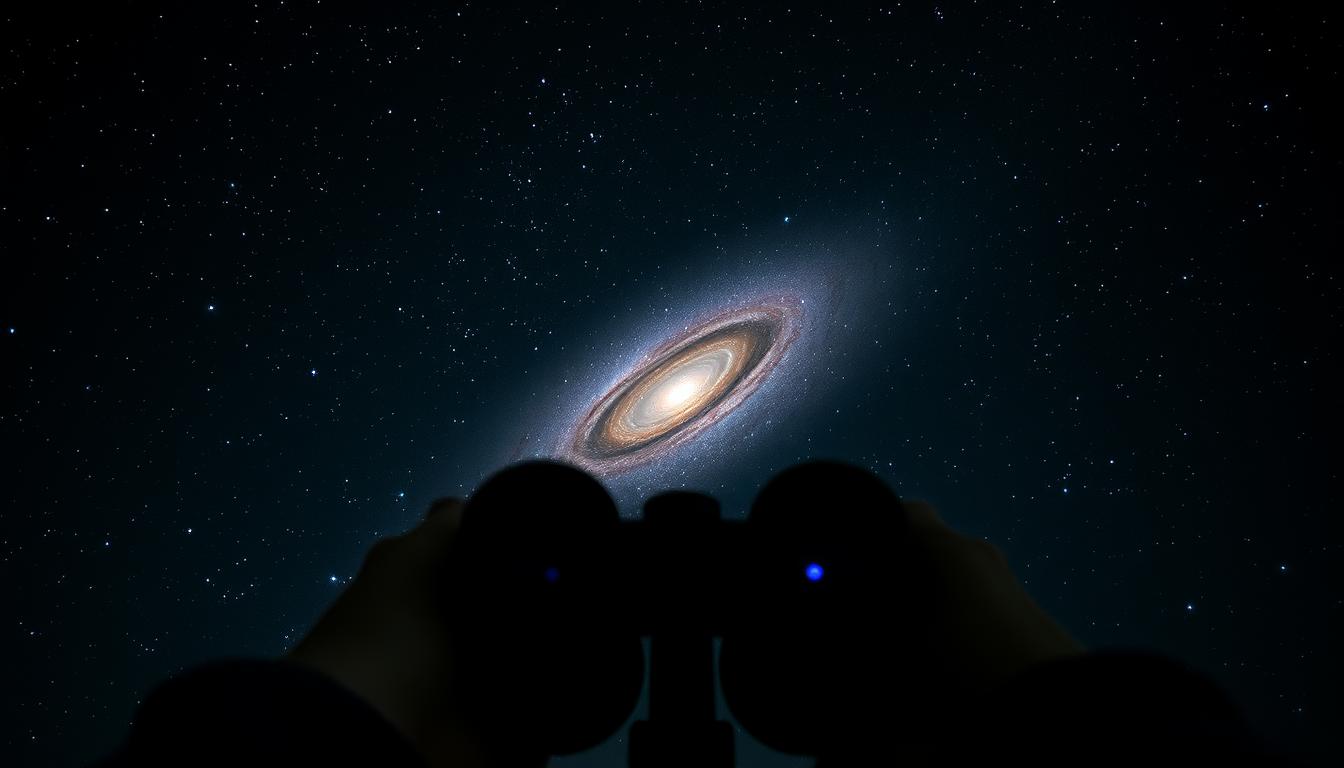
If you use binoculars, it gets a little better. You can see the shape, structure, and a little bit more detail around, like the spiral arms and the galaxy’s bright center. A telescope (depending on its quality) will make it even better, way more detailed, and way closer. You can also use familiar constellations like Cassiopeia and Pegasus to help locate it.
How Scientists Study Andromeda with Telescopes and Space Missions
The way scientists and astronomers look at Andromeda and study it is way different than the methods I mentioned. They use powerful telescopes on Earth and in space to explore the Andromeda Galaxy in detail. The Hubble Space Telescope and James Webb Telescope both captured stunning images of Andromeda’s core. They showed us its double nucleus and mysterious black hole.
Different things about space telescopes like Spitzer, James Webb, Hubble, and Herschel are that they use infrared and other wavelengths. With this method, they can uncover hidden dust rings and star-forming regions that visible light telescopes can’t see. Ground-based observatories scan Andromeda’s stars and map its motion to learn how it formed and how it’s moving toward the Milky Way.
Conclusion
The Andromeda Galaxy is the closest galaxy to ours, the Milky Way Galaxy. We can even see it in the sky on a clear night with clear eyes at the right time. But where is the Andromeda Galaxy? There is no open address like you’d find at a McDonald’s in a new town you are travelling to. However, you can look at the sky at the right time and at the right place, and you can see it, no matter where you look in the sky.
Andromeda is a huge galaxy (almost double the size of ours), and because it’s also far away, we are seeing it as if it were 2 million years ago. Maybe the galaxy has changed, and it’s not like that now, but we won’t see it for another 2 million years. But we can still see it in our skies.
FAQ
Can I really see the Andromeda Galaxy without any equipment?
Absolutely! Under a truly dark sky, free from light pollution, it’s visible as a faint, fuzzy smudge to the unaided eye. This makes it the most distant object you can see without a telescope or binoculars, a truly humbling sight.
What’s the best time of year to look for the Andromeda Galaxy in the sky?
The prime viewing season is during the fall and early winter months. In the Northern Hemisphere, it’s high in the sky from September through February, making it easier to find and observe for longer periods throughout the night.
How does the Andromeda Galaxy’s size compare to our own Milky Way?
The Andromeda Galaxy is actually larger than our home spiral galaxy. It contains roughly a trillion stars, significantly more than the Milky Way’s estimated 200 to 400 billion, and its disk spans about 220,000 light-years across.
Is it true that the Andromeda Galaxy is on a collision course with the Milky Way Galaxy?
Yes, but don’t worry, it’s not happening anytime soon! The two spiral galaxies are gravitationally bound and are expected to merge in about 4 to 5 billion years. This cosmic event will likely form a new, larger elliptical galaxy.